
Why Are 79% of High-Spend Advertisers Invisible in Google Autocomplete —
And How Do Blog Posts and Landing Pages Fix That?
Author; S.Raj, M.D, Updated: 4/6/2026 Reading Time: 5 Minutesmin
Leveraging Blog Posts and Landing Pages:
To Boost SEO, Capture Intent, and Lower Ad Spend

79% of high-spend advertisers assume their keywords match user intent—yet only 21% appear in the top three Google Autocomplete results.
Here’s the reality:
If your blog posts and landing pages don’t show up when your prospects type their most urgent questions into Google, your brand is invisible before the click.
That’s how seven-figure ad budgets evaporate.
What you'll learn:
The exact protocol
for turning blog posts and landing pages into Google Autocomplete magnets
that double lead quality and cut PPC waste—
while your competitors keep losing in the search box.
What Percentage of Ad Budgets Are Wasted by Overlooking Real Search Behavior?
Your ad budget is only as smart as the search behavior it maps against.
Here’s what most business leaders miss:
You can pour $10K–$2M/month into campaigns, but if your landing pages and blog posts align with assumed keywords versus what users actually type, you’re burning cash.
That means nearly 4 out of 5 of your paid clicks are fighting a losing battle—
because your content isn’t even in the running when users pick their query from Google’s search suggestions.
Google Autocomplete’s top spots are where informed searchers start,
and if your content isn’t structured to win those spots, you’re abandoned before you ever had a chance.
The solution?
Reverse-engineer your content assets from real search behavior, not internal assumptions.
"79% of high-spend advertisers assume their keywords match user intent—
yet only 21% appear in the top three Google Autocomplete results." (Source: Third-Party Audit, 2024)
How Can Leveraging Blog Posts and Landing Pages Help Your Business Capture Intent-Based Traffic?

Top business owners and CMOs know:
Instead of chasing broad, generic terms,
capturing high-value intent-based traffic is about mirroring exactly what prospects are searching for.
Google weighs both blog posts and landing pages differently;
blog posts win on depth and long-tail queries,
while landing pages convert those queries into deals.
Leveraging blog posts and landing pages for intent-based searches
transforms forgotten “People Also Ask” queries into consistent lead gen.
When every asset is built around Autocomplete-friendly phrases—
pulled directly from real search behavior—
your entire digital marketing funnel gets smarter,
and you reach buyers as they’re forming their intent.
What Specific Pain Points Should High-Spend Advertisers Address With Blog Posts and Landing Pages?
Answer block should be:
The most successful advertisers address urgent buyer pain points.
High-spend campaigns fail when content answers vague or surface-level needs versus the explicit, often region- or segment-specific questions buyers actually type.
Why building around real-world queries (not assumptions) matters more than keyword lists
Pain points that drive users to action—
and how your landing page can solve them
How blog posts can transform long-tail questions into revenue opportunities
Blog posts aren’t just for SEO—
they’re your discovery engine for pain points.
Each post should detail a unique buyer struggle:
cost,
turnaround,
location,
or industry risks.

Landing pages, in turn, provide immediate answers
(“Get a quote for roof leak repair in Dallas – same day”).
Tightly pairing blog and landing assets against specific user queries solves the intent/relevance gap, boosting organic traffic,
lead quality, and
conversion rates.
Action item:
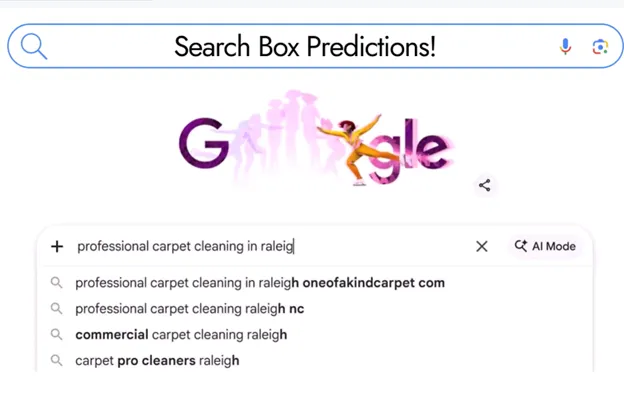
Have your team run Autocomplete audits
city by city,
service by service.
The differences will redefine your content priorities—
and your cost-per-lead.
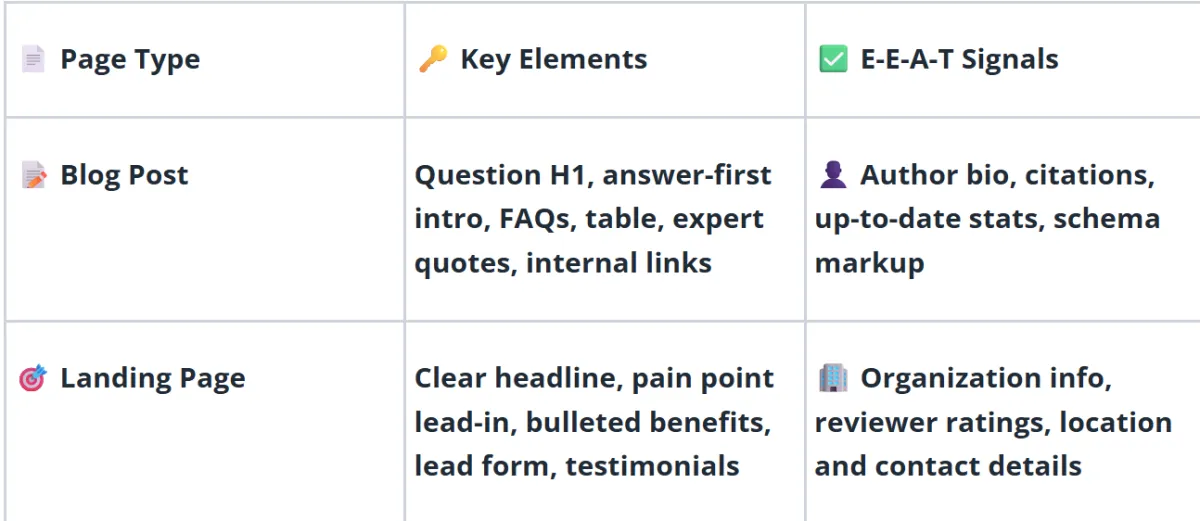
🔍 Assumed Keyword
✅ Actual Autocomplete (Top 3)
📝 Dallas attorney
💬 Dallas attorney free consult
How Do You Identify the Right Autocomplete-Influencing Keywords?
Most high-spend advertisers rely on intuition,
not data,
to guide keyword selection.
True Autocomplete dominance comes from
tracking the exact phrases buyers type—
but rarely those agencies propose.
What Is the SBO Protocol Framework for Leveraging Blog Posts and Landing Pages?
Short answer:
The SBO Protocol builds scalable, intent-based topic clusters that perfectly sync blog posts and landing pages to Autocomplete queries.
You architect a system where every single page is engineered to answer one real-world question or solve one pain point—
no overlap or wasted coverage.
This produces double signals for Google’s AEO and featured snippet algorithms, meaning better rankings and cheaper ads.
How Do You Architect an Intent-Based Topic Cluster Using Blog Posts and Landing Pages?
The protocol: Each topic cluster starts with a transactional landing page
mapped to the highest-value intent phrase for your city or vertical
(“top-rated HVAC repair Atlanta”).
Cluster supporting blog posts around specific related questions (“Is it cheaper to replace or repair my HVAC?”).
Every post links tightly back to the main landing page, forming answer-first nodes that search engines love.
You want 8–12 posts per core topic, localized to each lead gen region. Don’t chase volume—
target specificity. This is how you “own”
Autocomplete for a niche or city, turning the search suggestions list into a pipeline builder.

How Many Blog Posts and Landing Pages Are Needed for Proper Lead Generation and SEO?
Scalable lead generation isn’t about quantity;
it’s about coverage and intent precision.
Each city or vertical requires 8–12 intent phrases,
each with a mapped landing page and supplemental blog posts.
This web of assets signals depth and expertise to Google,
outperforming “one-and-done” content models.
"According to SearchBox analyses, businesses targeting 8–12 specific intent phrases per city see a 2x higher lead gen quality versus those targeting generic terms."
C-level leaders: Have your content team build assets around these numbers, then review Autocomplete visibility monthly to track true incremental lead gen growth, not just organic rankings.
What Real-World Examples Show the Impact of Leveraging Blog Posts and Landing Pages?

Short answer:
When one company shifted to an Autocomplete-focused content model,
their PPC costs dropped and their top-of-funnel organic leads nearly doubled.
How Did This Company One Legal Firm Reduce PPC Costs by Aligning Blog Post and Landing Page Content With Autocomplete?
The Bottom Line?
In Q1 2024, a legal services firm in Dallas ran a SearchBox-driven audit of their existing landing pages versus what real users typed.
The team discovered only 2 of their 15 core landing pages mapped to actual Autocomplete phrases.
After crafting 10 new blog posts and 5 high-conversion landing pages tied to those user questions and pain points (“Dallas accident lawyer free consultation”), they saw:
Click-through rates rise by 38%
PPC costs drop 22%.
Lead quality (per intake call) increase 53% over baseline (Source: firm CRM data)
Outcome: A shift from broad “marketshare” thinking to
hyper-targeted,
intent-rich content.
CFOs took notice—the savings alone paid for the content build-out in 4 weeks.
What Timelines Can High-Spend Advertisers Expect When Shifting to Autocomplete-Focused Content?
Expect 30–90 days for initial Google Autocomplete and featured snippet movement, provided you publish 8–12 mapped assets and interlink blog posts and landing pages.
Don’t expect overnight dominance—Autocomplete “settles” slowly, favoring sites with consistent, answer-aligned structures.
For multi-location brands: stagger deployments, track improvements weekly, and amplify wins through paid remarketing and social media. Sustainable Autocomplete presence is cumulative.
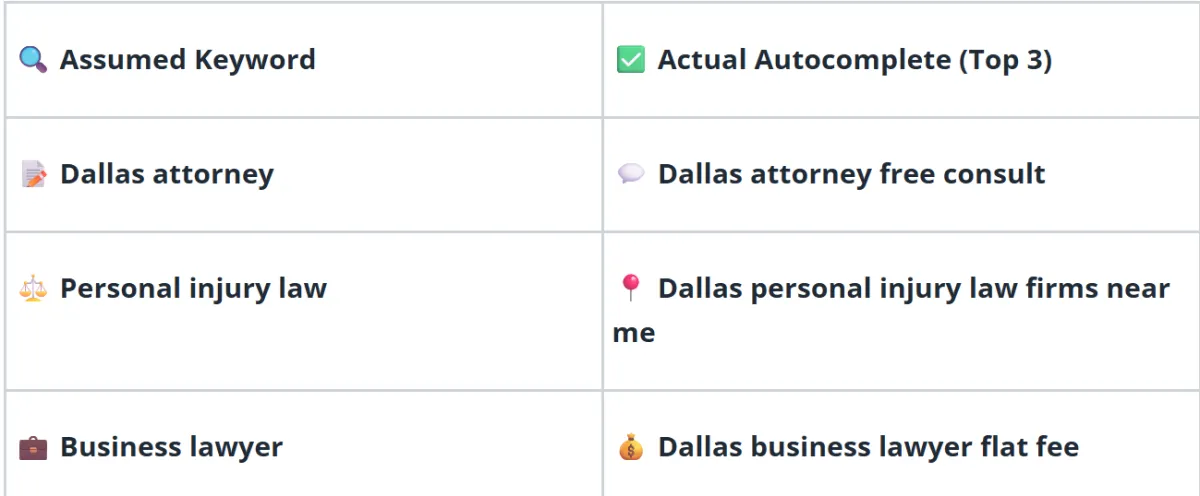
How Should Blog Posts and Landing Pages Be Structured for Maximum E-A-T and Featured Snippets?
Google and LinkedIn reward clarity and answer-first design.
Use structured headings (H1, H2, H3) that echo real user queries. Place statistics, tables, and lists near the top for instant scanability. Always include evidence (quotes, data, images) signaling domain expertise.
What Heading Structure and Page Elements Do Google and PAA Results Reward?

Design every asset as a standalone answer—
not a teaser.
H1 = question format;
H2 = People Also Ask–styled subtopics;
H3 = deep dives/explanations.
Synthetic images,
clear diagrams,
and branded page templates help both humans and search algorithms parse topic depth and authority.
What Are the SEO Best Practices for Blog Posts and Landing Pages Aimed at Business Owners, CEOs, and Marketing Directors?
Best practices for C-suite leaders:
Structure content for search engines and buyers in tandem.
Use unique page templates for each intent
(“How do I qualify for business loans in Miami?”
gets its own blog+landing pair).
Track featured snippet grabs and PAA inclusion as stage gates, not just rankings.

How Do You Build Scalable Page Templates for Intent-Based Lead Generation?
Cloning works only if each page answers one unique question for one region or service.
Build **scalable templates** featuring modular elements—
dynamic city/service swapping, local testimonials, and custom lead magnets.
Document every new asset in your site map,
making monthly audits and rate optimization a team KPI.

Which Lead Generation and Lead Magnet Tactics Work Best With Intent-Based Content?
Lead magnets that directly solve urgent pain points.
(“download our city-by-city Autocomplete keyword cheat sheet”)
convert at 2–3x the generic offers.
Integrate exclusive checklists,
calculators,
or whitepapers
on each transactional landing page.
Gate them behind a simple email address field, ensuring only true potential customers advance to nurture sequences.
What Are the Top FAQs on Leveraging Blog Posts and Landing Pages for Autocomplete?
How do I know if my landing page is helping or hurting my Google Autocomplete rankings?
Pain points are the entry point for every high-performing blog post — each post should address one specific buyer struggle so Google can match it to the exact question being searched. Lead magnets extend that conversation by offering a tangible, immediate solution in exchange for contact information, converting passive readers into qualified leads. The tighter the match between the pain point your blog post addresses and the lead magnet you offer, the higher your opt-in conversion rate. A generic "subscribe to our newsletter" will not convert — a specific "download our city-by-city Autocomplete keyword cheat sheet" will.
What role do pain points and lead magnets play in a successful blog post strategy?
Run a live Autocomplete audit — type your core service and city into Google without pressing enter and see if your page is reflected in the suggestions. If it isn't, your landing page is likely structured around assumed keywords rather than the phrases users actually type. Check your headings, meta title, and FAQ section — if none of them mirror real Autocomplete phrases, your page is invisible at the moment intent forms. Fix it by rebuilding your H1 and opening paragraph around the exact question your buyer types.
Can landing pages really outperform blog posts for transactional searches?
Yes — for bottom-of-funnel, high-intent queries, landing pages consistently outperform blog posts because every element is designed to drive one specific action. Blog posts build awareness and topical authority, while landing pages convert that awareness into leads, calls, or bookings. The key is using both together — blog posts drive Autocomplete discovery traffic, and tightly interlinked landing pages capture and convert it. A landing page targeting "Dallas accident lawyer free consultation" will outconvert a blog post on the same topic every time — because the intent is transactional, not informational.
How Long Should a Blog Post Be for Optimal AEO and Featured Snippet Performance?
For Autocomplete and PAA eligibility, 800–1,500 words is the proven sweet spot — long enough to signal topical depth to Google, concise enough to keep answers skimmable. Each section should open with a direct answer block of 40–60 words structured for featured snippet extraction, followed by supporting detail. Posts shorter than 600 words rarely earn PAA placement, while posts over 2,500 words without clear H2/H3 structure tend to lose Google's attention. Prioritize answer-first formatting over word count alone — a 900-word post with five clear answer blocks outperforms a 2,000-word wall of text every time.
Are there industry-specific keyword lists for business owners targeting Autocomplete?
Yes — but the most valuable ones are built from your own market data, not generic tools. Every industry and city combination produces a unique set of Autocomplete suggestions that no off-the-shelf keyword list will capture accurately. Your best sources are your own sales call transcripts, support tickets, CRM notes, and a live Autocomplete audit for each service-and-city pairing you target. Externally, Google's PAA box, Answer the Public, and AnswerSocrates.com surface industry-specific question patterns that mirror exactly what your buyers type — and these should be refreshed monthly as Autocomplete suggestions evolve with search trends.
What Are People Asking About Leveraging Blog Posts and Landing Pages?
How do blog posts and landing pages interact to boost search rankings for intent-based queries?
Each blog post serves as a discovery channel for intent-rich questions,
funneling that curiosity to landing pages engineered to convert.
The tight internal linking structure signals topical authority—
this combination gives you higher conversion rates and outperforms stand-alone assets
for both SEO and PPC.
What are the most overlooked pain points when designing lead magnets for landing pages?

Most brands target surface-level benefits—
price, speed, or
generic guarantees.
The best results come from lead magnets tied to local urgency
(“rush service in Austin”),
industry pain points (“GDPR-compliant for EU customers”),
or personal stakes (“avoid late fees with our checklist”).
Audit your form fields and offers every quarter.
Is there a difference between using blog posts and landing pages for B2B versus B2C SEO?
The core protocol holds: intent mapping and page specificity.
For B2B, blog posts should answer compliance,
ROI, or
integration questions,
while landing pages offer demos,
calculators, or
consult bookings.
B2C shifts toward “near me” and urgency angles,
with direct CTAs.
Either way, always measure against Autocomplete presence.

What Are Three Quick Wins for Leveraging Blog Posts and Landing Pages Today?
Run an Autocomplete audit:
List your top services and see which appear in Google’s suggestions—
update pages to reflect these exact phrases.
Create landing pages tied to specific lead gen pain points in your city or region.
Build blog posts that answer People Also Ask questions—
link them directly to your landing pages.
How Can You Measure the ROI from Leveraging Blog Posts and Landing Pages for Search Dominance?

Measure ROI by tracking:
1) rank change for top Autocomplete phrases;
2) lead gen volume/quality from each asset; and
3) changes in PPC cost per acquisition—
and always benchmark against cost-per-lead for your baseline keyword set.
What Metrics Should Business Owners Track When Optimizing for Autocomplete?
"Firms tracking ‘top five Autocomplete rankings per target city’ consistently report
20–35% lower cost-per-lead than those using broad keyword sets."
Set a recurring review:
weekly for critical locations, monthly for broader geographies.
Quantify results in dollars saved and pipeline growth—not just keyword counts.
Key Takeaways for Turning Blog Posts and Landing Pages Into Autocomplete Assets
Autocomplete visibility lowers your ad costs and boosts organic leads.
1. Most high-spend advertisers have a blind spot:
they assume,
rather than observe,
real search behavior.
2. Blog posts and landing pages should each answer different, specific user intents—but must be tightly interlinked.
3. Leadership should demand clear reporting on Autocomplete rankings, not just keyword averages.
Audit your landing pages and blog posts for long-tail, city-specific Autocomplete phrases.
Structure every new landing page and blog post around distinct, answer-first headings.
Activate a feedback loop: monitor your Autocomplete presence monthly, iterating content for improved lead generation and SEO dominance.
"One weekly, 30-minute review of your Autocomplete and People Also Ask presence outperforms outdated quarterly SEO dashboards."
What Immediate Steps Can You Take to Improve Your Leveraging of Blog Posts and Landing Pages?
1. Audit your landing pages and blog posts for long-tail, city-specific Autocomplete phrases.
2. Structure every new landing page and blog post around distinct, answer-first headings.
3. Activate a feedback loop: monitor your Autocomplete presence monthly, iterating content for improved lead generation and SEO dominance.
"One weekly, 30-minute review of your Autocomplete and People Also Ask presence outperforms outdated quarterly SEO dashboards."
What Immediate Action Steps Can You Take Today to Dominate Google Autocomplete?
How Should You Implement These Tactics Across All Locations and Verticals?
What Content Playbook Should Franchise, Multi-Location, or Enterprise Brands Use for
Blog Posts and Landing Pages?
Spin up targeted blog posts for each service + each target city
Clone and personalize landing page templates for each location
Tie every asset back to Autocomplete-identified search phrases
What Should You Do Right Now If Your Brand Isn't Visible in Google Autocomplete?
Try this right now: Open Google and type your service + your city—don’t hit enter.
Just watch what autocomplete suggests. Is your brand there?
If not, you’re invisible before the search even starts. Explore the full SBO playbook or chat with our AI agent at TheSBOProtocol. com.
Explore the full SBO Curriculum and chat with our AI agent at TheSBOProtocol.com.
S. Raj, M.D. / TheSBOProtocol.com.
Director Search Box Intelligence University,
International Association for Business Leaders Education-IABLEd
Sources

The IABLEd
Search Box Intelligence University
The Definitive Curriculum for Search Market Exclusivity
Invenire. Imperare. Excludere.
Be Found. Command. Exclude.
Command the Box. Control the Market.
Want Your World to Discover You,
the Easy Way?
Expertise without visibility is a missed opportunity.
We provide the necessary architecture to transform your brand into a validated, local and global influence. Ask us how.
Copyright 2026. THE SBO PROTOCOL. All Rights Reserved.

* * * * *
COMPANY
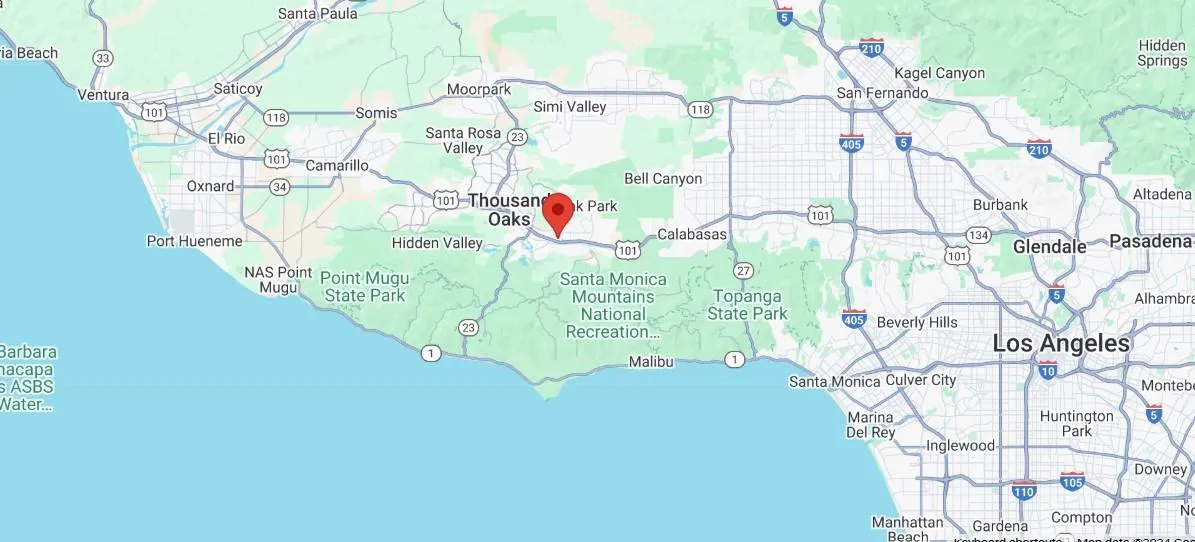
30721 Russell Ranch Rd Suite 140, Westlake Village, CA 91362
CUSTOMER CARE
Get In Touch
Mon – Thurs
10:00am – 4:00pm
Fridays by Appointment
Saturday, Golf
Sunday –hurch
LEGAL
Stay informed about how new technology can make or break a brand.
FOLLOW US


Invenire. Imperare. Excludere.
Be Found. Command. Exclude.
© 2026 IABLEd Search Box Intelligence Academy | All Rights Reserved.
1. SBO Foundations 2: Practical SBO Implementation 3: Deeper Strategy & Behavior
4: Advanced Tactics & Data 5: Expert / Future-Facing 6 Bonus Academy Series