
9: The Site Architecture Mistake That's Quietly Killing Your Google Visibility
Author; S.Raj, M.D, Updated: 4/1/2026 Reading Time: 6
min
Structuring Your Site Around Search Box Phrases

Nearly 80% of enterprise websites are invisible for their core search box phrases—because they build for themselves, not for real Google users. (Yoast SEO survey)
What Reveals the Real Ranking Problem Hiding in Your Site Structure?
You’re spending five to seven figures monthly on Google Ads—yet, your brand remains invisible at the precise moment buyers make their final decision. The culprit? Not your content, not your blog post frequency, but how you structure your site around search box phrases—the actual queries buyers type and Google’s autocomplete suggests.
“Nearly 80% of enterprise websites are invisible for their core search box phrases—because they build for themselves, not for real Google users.” — Yoast SEO survey data.
Most businesses spend heavily on paid traffic but neglect the way their site architecture influences organic search.
Search box phrases—those autocomplete suggestions—reflect the actual journeys real buyers take.
If your brand isn’t mapped to these, you simply never show up at the decision moment.
How Does Site Architecture Help SBO?

Site architecture is how you organize, structure, and link your site’s content to signal relevance and authority for search box suggestions that real buyers type—not just what you think they search for.
Classic site structures follow what brands wish people were searching. But real-world buyers reveal their intent in autocomplete.
Search box phrase architecture starts with how buyers actually search in real time—
then aligns your landing pages, clusters, and internal links to those search suggestions.
Ignoring search suggestion data can cost 30%–50% of search visibility in competitive industries.
How Does Traditional Navigation Hurt Your Organic Visibility?
Traditional site structure sorts pages by products, departments, or company organization—
ignoring how users actually search.
What Does a Search Box Phrase-Aligned Structure Look Like?
Search box phrase-aligned structure clusters pages, navigation, and internal linking around what real buyers are typing in Google’s search box—
including long-tail queries and city+service combos.

What You'll Learn in This Guide to Structuring Your Site Around Search Box Phrases
How to identify high-value search box phrases in your market
Before/after example: a poorly structured site vs. an SBO-optimized one
The three most common architecture mistakes (and how to fix them)
How to audit your site structure in five practical steps
Frequently asked questions about site structure, search suggestions, and SEO impact
What's the Difference: Traditional Site Structure vs. Search Box Phrase-Aligned Structure?
Traditional site structure sorts pages by products, departments, or company organization—
ignoring how users actually search.
Search box phrase-aligned structure clusters pages, navigation, and internal linking around what real buyers are typing in Google’s search box—
including long-tail queries and city+service combos.
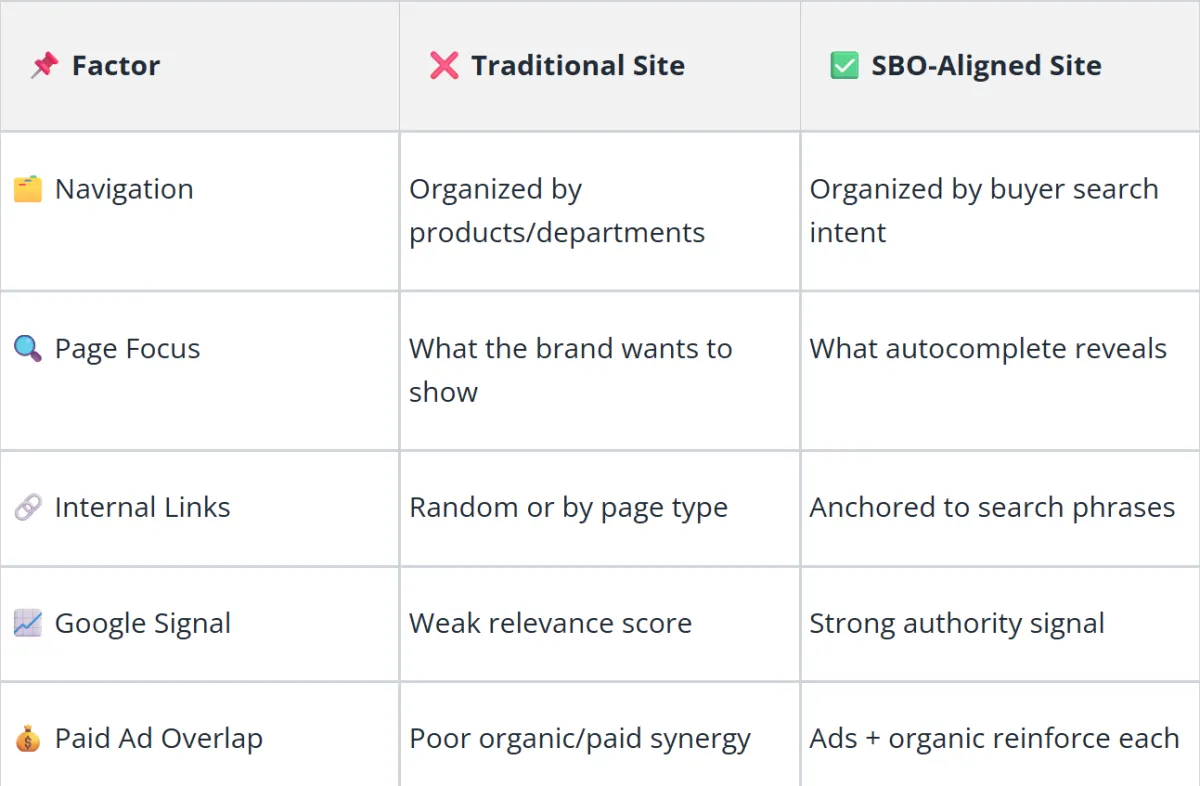
Traditional:
Focuses navigation on products/services, not buyer queries.
Search box phrase-aligned: Organizes landing pages and internal links around real-time search intent and autocomplete data.
Outcome: Increased relevance score for Google’s algorithm and stronger visibility when real buyers search.
Key Intelligence Insight
SBO isn't about ranking; it's about ownership.
Once a keyword is reserved in the autocomplete, your competition is effectively erased from the searcher's mind.
What Are the 3 Site Architecture Mistakes That Make You Invisible in Google Autocomplete?

Avoid these if you want to see your site ranking for the search suggestion terms buyers actually use.
How Does Wrong Page Hierarchy Confuse Google About Your Relevance?
Burying primary keyword pages deep in your navigation.
Lacking a clear hierarchy tied to search box phrases.
Symptoms:
Your ranking pages aren’t the ones you want to convert.
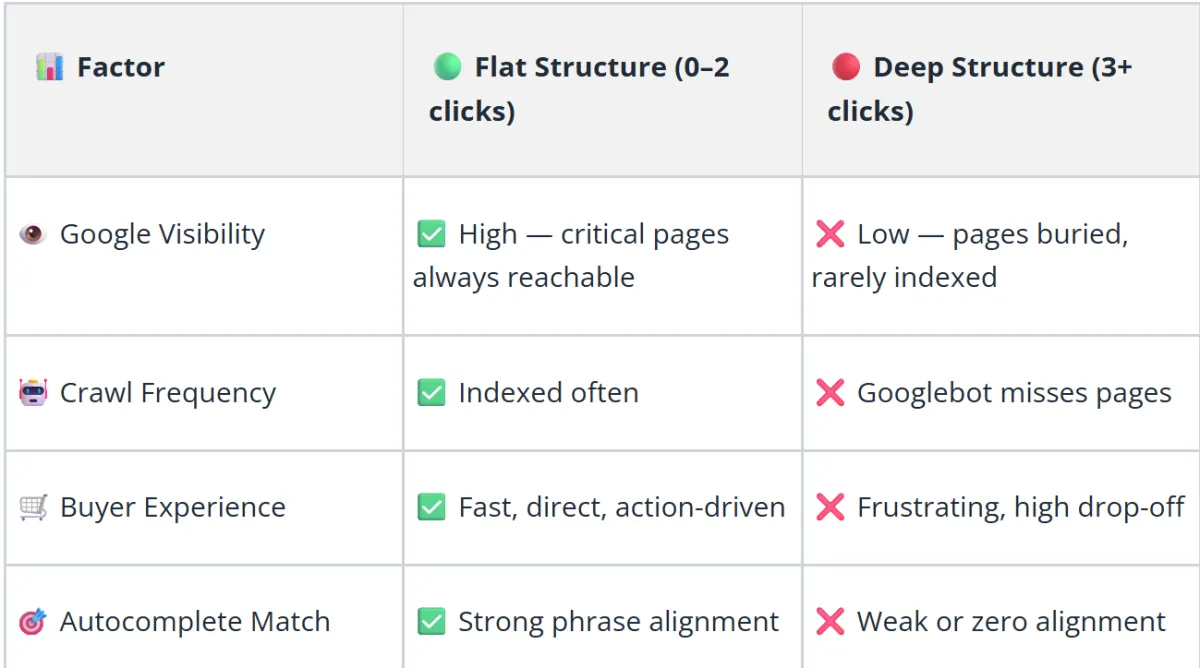
When your landing pages for critical search terms sit three or more clicks from the homepage, Google’s crawler downgrades their importance. Instead, make sure every main search box phrase is visible from your homepage or primary navigation.
That’s how you send clear, high-authority signals to Google.
Why Does Ignoring Topic Clusters Kill Your Internal Linking and SEO Performance?
Topic clusters group related landing pages and cornerstone content around a main search suggestion.
A lack of clusters: Google can’t establish topical authority.
Fix: Use autocomplete as your outline for cluster hubs.
Sites lacking well-linked clusters aren’t just missing organization; they’re missing relevance signals.
Every time you ignore opportunities to build topic clusters anchored to autocomplete phrases, your content organization fractures and your pages compete for the same terms, reducing the authority Google assigns to each landing page.
How Does Navigation That Ignores Search Intent Block You from Ranking on Purchase-Ready Phrases?
How Does Navigation That Ignores Search Intent Block You from Ranking on Purchase-Ready Phrases?
Navigation mirrors internal org chart instead of buyer journeys.
Fails to prioritize search suggestions that drive profitable traffic.
Fix: Prioritize navigation labels that echo high-value search intent and input field behaviors.
If buyers type “best payroll service Dallas” but your navigation says only “Solutions” or “Our Products,” you’re invisible for purchase-ready intent. Your navigation must match and prioritize terms already proven by buyers in Google’s input field. Every label should echo what autocomplete reveals, not what makes sense to your team.
Why Does Ignoring Topic Clusters Kill Your Internal Linking and SEO Performance?
Topic clusters group related landing pages and cornerstone content around a main search suggestion.
A lack of clusters: Google can’t establish topical authority.
Fix: Use autocomplete as your outline for cluster hubs.
Sites lacking well-linked clusters aren’t just missing organization; they’re missing relevance signals.
Every time you ignore opportunities to build topic clusters anchored to autocomplete phrases, your content organization fractures and your pages compete for the same terms, reducing the authority Google assigns to each landing page.
How Does Flat vs. Deep Site Structure Impact Your Rankings with Search Suggestions?
Click depth—the number of clicks to reach a page—directly impacts your visibility for buyer search suggestions.
The flatter your site structure, the faster buyers and bots discover your landing pages aligned with high-value search suggestions.
According to Yoast SEO, average click-through rate (CTR) drops 55% for every level deeper a page sits in your structure.
What Is Click Depth and Why Does It Matter for Search Box Optimization?
Flat structures make it easier for Google’s crawler to discover and prioritize your search suggestion-aligned landing pages.
Why Flat Site Structure Wins for Autocomplete Visibility
Deep architectures push critical pages out of reach, killing your autocomplete and search box phrase presence.
What Does a Real Search Box Phrase Site Structure Look Like?
The ideal site for structuring your site around search box phrases isn’t shaped like a product catalog—
it’s mapped from autocomplete up.
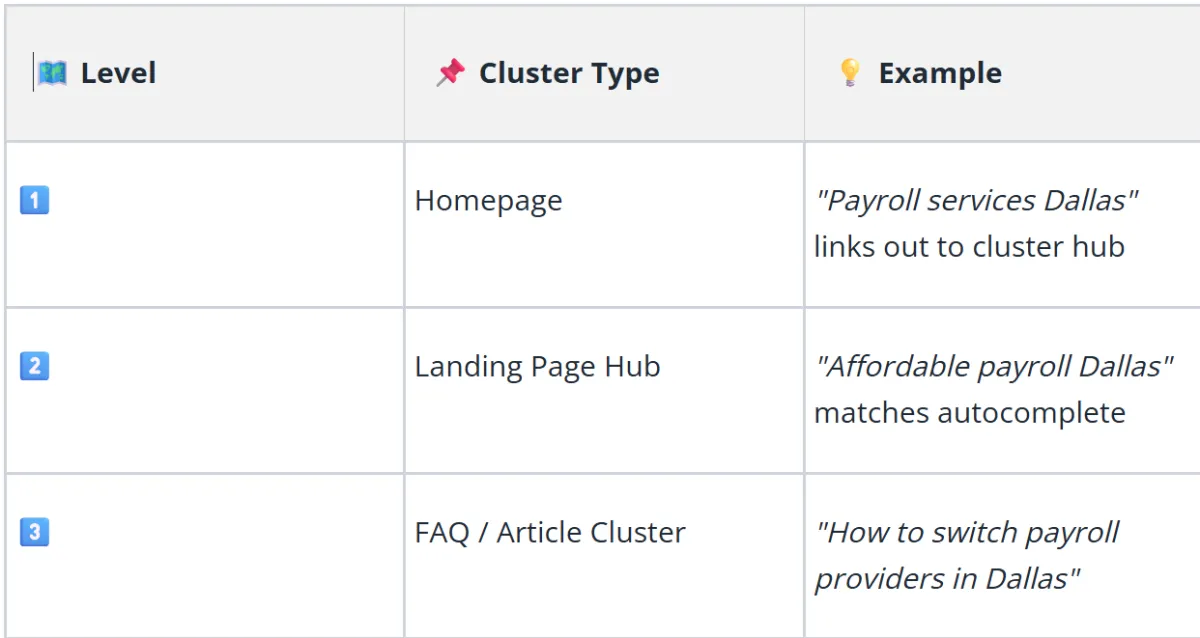
Your homepage connects directly to each high-intent search suggestion for your services, then clusters out to pillar landing pages, each surrounded by supporting articles and FAQs linked contextually using input field anchor text.
Homepage: Links out to each high-volume search suggestion for your service + city.
Cluster Hubs: Each search box phrase (as seen in Google autocomplete) gets a dedicated pillar page.
Supporting Content: Deep articles, FAQs, and cornerstone content linked via input field-style anchor text.
How Should Your Homepage Connect to Search Box Phrase Clusters?
Your homepage connects directly to each high-intent search suggestion for your services, then clusters out to pillar landing pages, each surrounded by supporting articles and FAQs linked contextually using input field anchor text.
Homepage: Links out to each high-volume search suggestion for your service + city.
Cluster Hubs: Each search box phrase (as seen in Google autocomplete) gets a dedicated pillar page.
Supporting Content: Deep articles, FAQs, and cornerstone content linked via input field-style anchor text.
What Are Cluster Hubs and How Do They Support Pillar Landing Pages?
Cluster Hubs: Each search box phrase (as seen in Google autocomplete) gets a dedicated pillar page.
Supporting Content: Deep articles, FAQs, and cornerstone content linked via input field-style anchor text.
How Do I Audit My Site Structure for Search Box Phrase Alignment?

How Do I Audit My Site Structure for Search Box Phrase Alignment?
You can check if your site structure is aligned with search suggestions in just five steps:
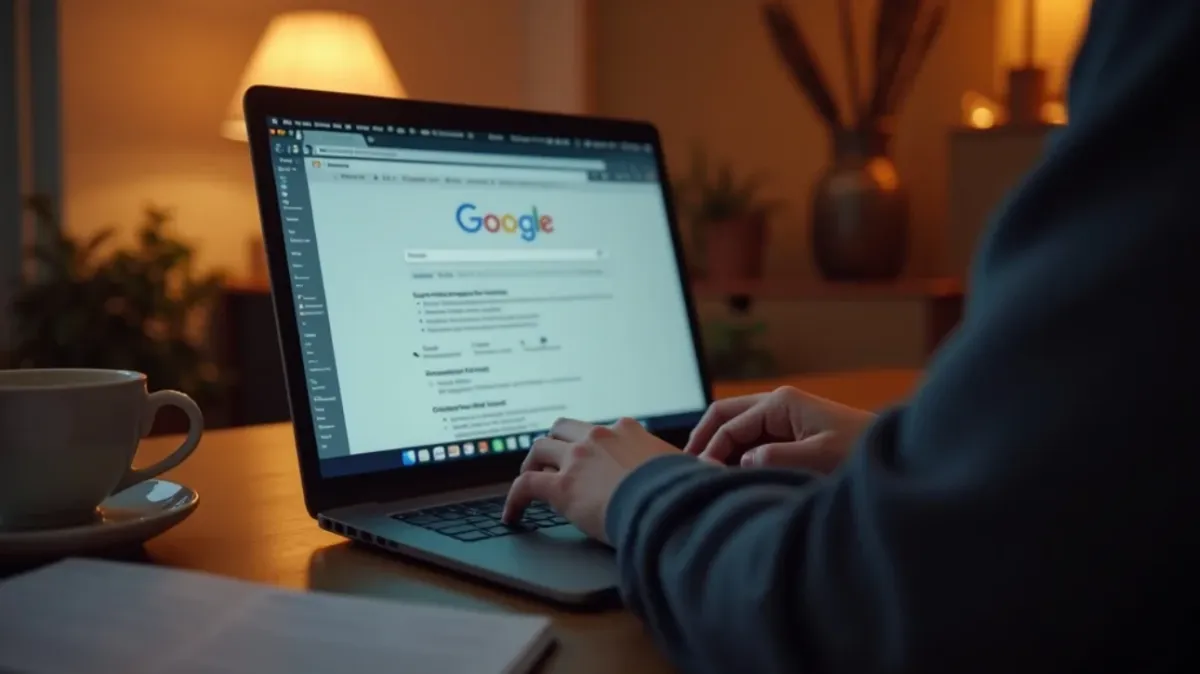
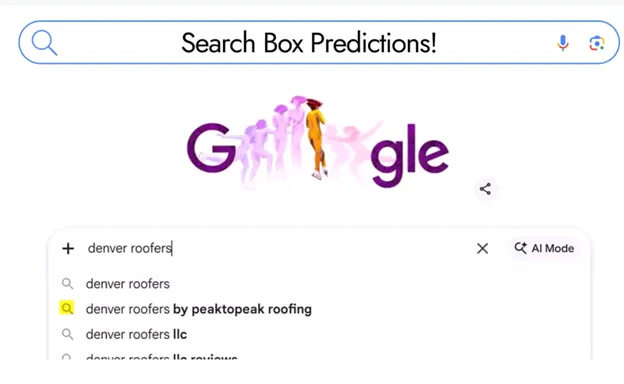
Open Google and start typing your primary service and city—note the autocomplete search suggestions.
Check if your landing pages and clusters match exactly to each search suggestion.
Analyze click depth: Can buyers and bots reach each search box phrase page in 2 clicks or less?
Review internal linking: Are your most important pages cited contextually and from navigation?
Use Google Search Console’s Coverage and Performance reports to find which pages align with search intent and which don’t.

Why Are Internal Linking and Cornerstone Content Essential for Search Box Phrase SEO?
Why Are Internal Linking and Cornerstone Content Essential for Search Box Phrase
Internal linking distributes authority across your site, guiding Google and buyers to cornerstone landing pages tied to real search suggestions.
Direct, context-driven links—
using anchor text that matches input field phrases—
funnel both users and Google’s crawler to your foundation content and supporting articles.
How Does Internal Linking Distribute Authority to Key Landing Pages?
Landing pages for long-tail queries benefit most from direct, context-driven links from relevant articles.
Neglecting internal linking and cornerstone content leaves your most valuable pages isolated and hard for Google to determine their relevance.
What Role Does Anchor Text Play in Search Box Phrase Alignment?
Internal linking distributes authority from high-traffic pages to cornerstone content built around search suggestions.
Landing pages for long-tail queries benefit most from direct, context-driven links from relevant articles.
Neglecting internal linking and cornerstone content leaves your most valuable pages isolated and hard for Google to determine their relevance.
People Also Ask: What Are the 7 C's of a Website?
Clarity
Consistency
Content
Credibility
Context
Compatibility
Creativity
In the context of site structure and search box phrases, 'Clarity' and 'Context' mean mapping your navigation and clusters to real search intent and autocomplete data —
not just what you think users want.
People Also Ask: What are the 5 Golden Rules of Web Design?
Keep navigation simple and direct
Design for search intent
Prioritize speed and accessibility
Structure content around topics (clusters)
Align all pages with landing page best practices
Answer: When structuring your site around search box phrases, simple nav and topical clusters mapped to autocomplete result in higher rankings and engagement.

People Also Ask: How to Structure Your Website for SEO?
Map site architecture to actual search suggestions
Use pillar landing pages for each primary search box phrase
Implement contextual internal linking to cornerstone content
Minimize click depth to key pages
Use descriptive navigation mirroring search intent
Answer: Build from autocomplete up – not corporate org chart down. Start every cluster and landing page with real input field data from Google’s search box for your service, city, and solutions.
People Also Ask: What are the 13 Parts of a Website?
Homepage
Header
Footer
Navigation bar
Main landing pages
Cluster hubs/pillar pages
About page
Contact page
Blog/articles
FAQs
Legal/Privacy
Image galleries
Input fields (search box, forms)
Answer: For search box phrase SEO, prioritize your main landing pages, pillar/cluster hubs, and navigation for maximum visibility — not just aesthetics.
Frequently Asked Questions
About Structuring Your Site Around Search Box Phrases

How do search suggestions impact my organic rankings?
Should every autocomplete phrase get its own landing page?
How deep should pillar pages be in my navigation?
Can I use landing pages for multiple related search box phrases?
How do I track which phrases bring the most traffic?
Is Yoast SEO necessary for architecting around search suggestions?
What’s the ideal balance between internal linking and external links?
In Upcoming Publications, We Discuss:
How do I integrate search suggestion research into ongoing content strategy?
What role do input field labels and navigation wording play in SEO?
How often should I review or restructure my site’s architecture for search box alignment?
What’s the Takeaway for CEOs and Enterprise Advertisers?
The difference between being a traffic juggernaut and an invisible brand comes down to building your site around real search box phrases—
not gut feelings.
Keyword alignment and search intent are the new site structure fundamentals.
Action now:
Audit your own site using Google search box data before spending another $1,000 on ads.

Ready to See if Your Site Passes the Search Box Phrase Test?
Try this right now: Open Google and type your service + your city — don't hit enter. Just watch what autocomplete suggests. Is your brand there? If not, you're invisible before the search even starts. Explore the full SBO playbook or chat with our AI agent at TheSBOProtocol.com.
Sources
Yoast SEO Industry Survey 2024 – https://yoast.com/seo-industry-survey-2024/
SBA Small Business Data – https://www.sba.gov/
S. Raj, M.D. / TheSBOProtocol.com
"After optimizing for local autocomplete, our franchise locations broke into Google Map 3-pack for 24 city + service combos — with paid search spend cut by 34%." — SBO Client, HVAC Franchise, Atlanta


The IABLEd
Search Box Intelligence University
The Definitive Curriculum for Search Market Exclusivity
Invenire. Imperare. Excludere.
Be Found. Command. Exclude.
Command the Box. Control the Market.
Want Your World to Discover You,
the Easy Way?
Expertise without visibility is a missed opportunity.
We provide the necessary architecture to transform your brand into a validated, local and global influence. Ask us how.
Copyright 2026. THE SBO PROTOCOL. All Rights Reserved.

* * * * *
COMPANY
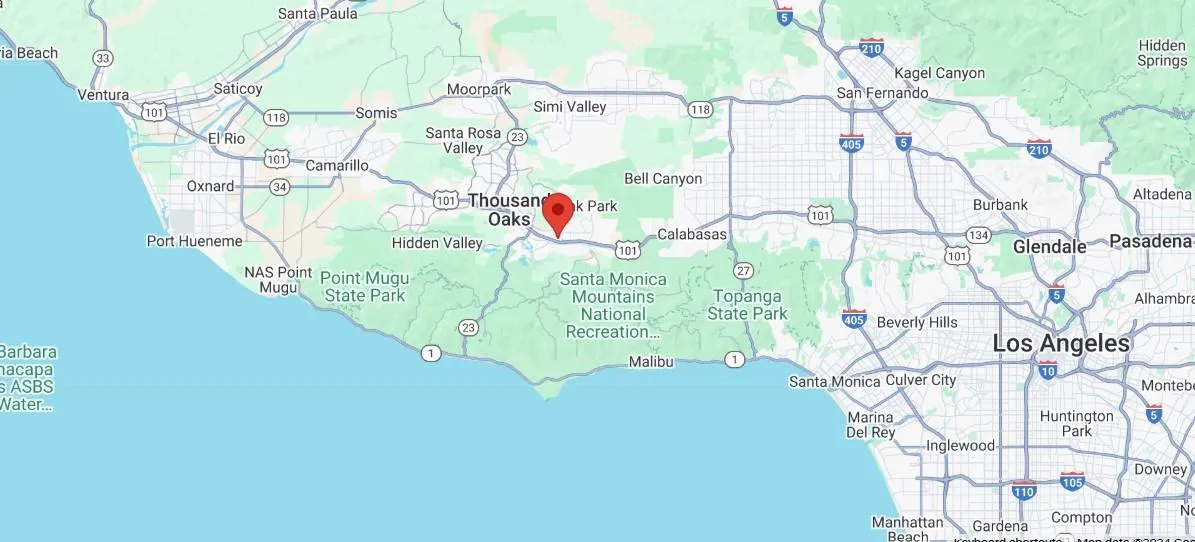
30721 Russell Ranch Rd Suite 140, Westlake Village, CA 91362
CUSTOMER CARE
Get In Touch
Mon – Thurs
10:00am – 4:00pm
Fridays by Appointment
Saturday, Golf
Sunday –hurch
LEGAL
Stay informed about how new technology can make or break a brand.
FOLLOW US


Invenire. Imperare. Excludere.
Be Found. Command. Exclude.
© 2026 IABLEd Search Box Intelligence Academy | All Rights Reserved.
1. SBO Foundations 2: Practical SBO Implementation 3: Deeper Strategy & Behavior
4: Advanced Tactics & Data 5: Expert / Future-Facing 6 Bonus Academy Series