
8: Why Doesn't Your Content Show Up for the Queries Your Customers Actually Type?
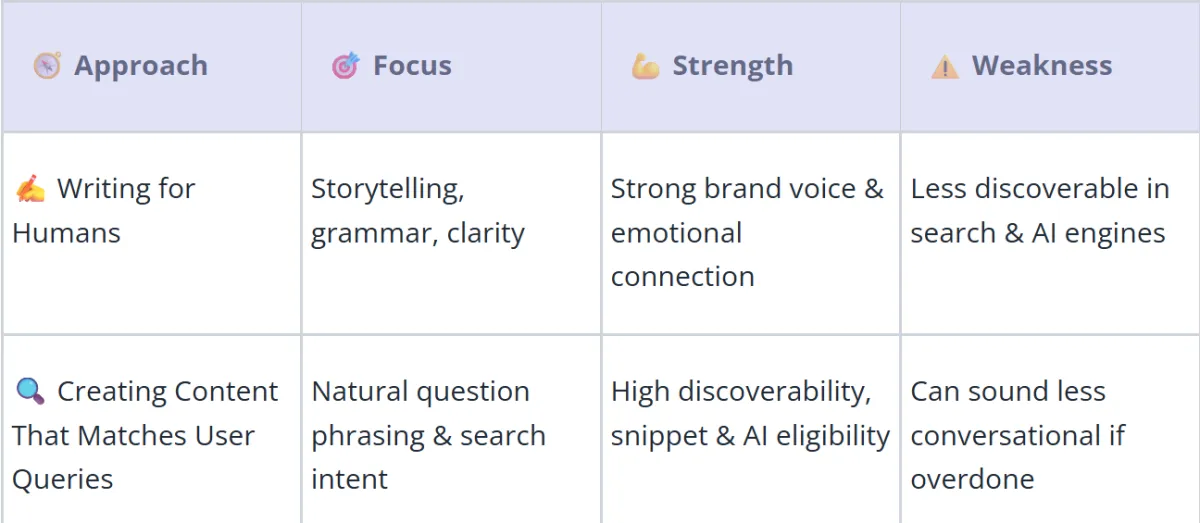
There's a Big Difference Between Writing for Humans
and Writing for How Humans Search
Author; S.Raj, M.D, Updated: 3/301/2026 Reading Time: 6min
The On-Page Fix Most SEOs Miss

Is Your Content Search Box Optimized?
See if Your Content is Autocomplete Ready.
Bold truth:
over 70% of executives admit their content isn't showing up for the queries their customers actually type —
and it's costing them compounding organic revenue every single day.
Across the US, Canada, UK, Ireland, Australia, and New Zealand, the businesses dominating Google Autocomplete, featured snippets, and AI-generated answers are not necessarily publishing more content. They are publishing content that mirrors the exact language their buyers use the moment they open a search box.
For CMOs and C-suite leaders managing six and seven-figure content budgets across Los Angeles, Toronto, London, Dublin, Sydney, and Auckland —
this is the critical distinction most agencies never address.
You can invest heavily in brand storytelling, thought leadership, and paid placement —
and still be completely invisible the moment a real buyer starts typing.
The shift is subtle but commercially powerful:
from educating and persuading →
to answering and appearing.
Traditional content builds brand voice.
Content mapped to user queries earns featured snippets, AI citations,
People Also Ask boxes, and organic traffic that paid ads can never replicate.
Whether your buyers are searching in Los Angeles, Toronto, London, Dublin, Sydney, or Auckland —
the query-matching logic Google applies is identical across every market.
The businesses winning are not outspending you.
They are simply giving Google exactly what it needs to surface them first.
"Over 70% of executives say their content still doesn't show up for the queries their customers actually type." — Content Marketing Institute
What Is the Real Difference Between Content That Ranks and Content That Doesn't?
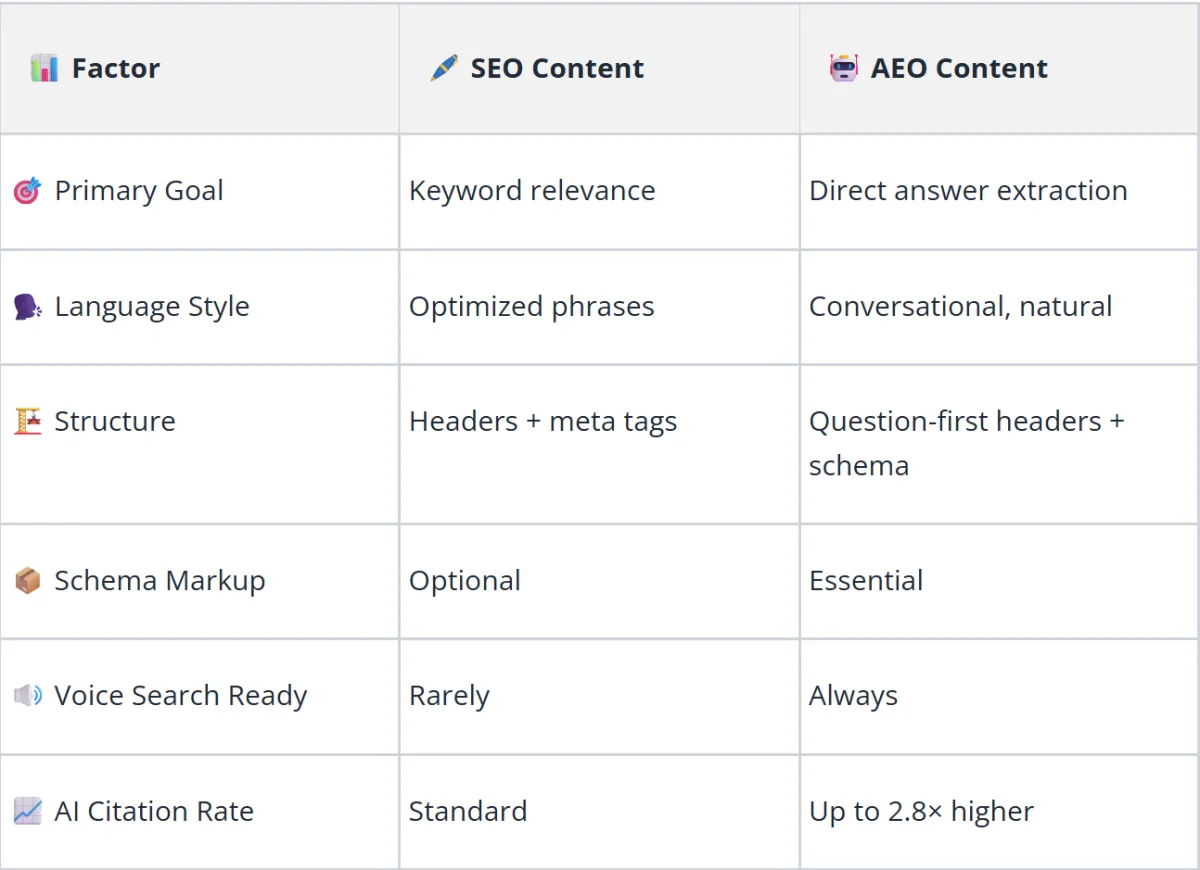
Why Does Search Intent Matter More Than Keyword Density?
Google doesn't just rank pages that mention keywords —
it rewards pages that best answer the intent behind the words.
Miss the intent and even high-quality, well-written content gets ignored entirely.
There are 4 search intent types every piece of content must be mapped to before it is published:
Matching your content type to search intent dramatically increases organic reach — because every page is now built for a specific user behavior, not a general topic.
What Are The 4 Types of Intent Users Type?
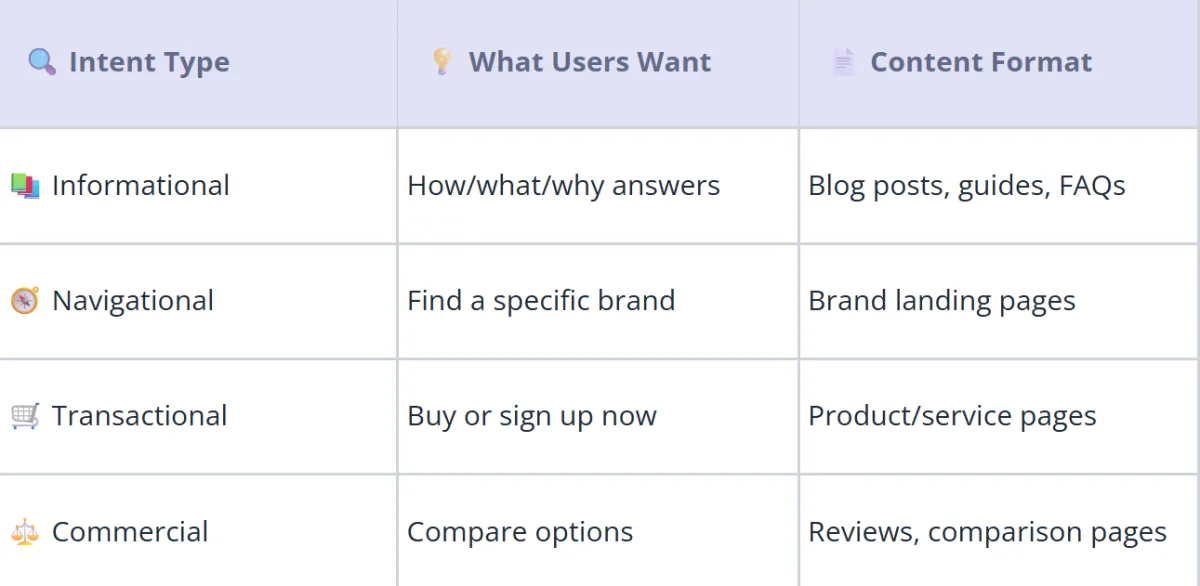
The 4 Types of Search Intent
Informational — "What is search box optimization?"
Navigational — "TheSBOProtocol login"
Commercial — "Best SEO agency for small business"
Transactional — "Hire SEO consultant Los Angeles"u
Key Intelligence Insight
SBO isn't about ranking; it's about ownership.
Once a keyword is reserved in the autocomplete, your competition is effectively erased from the searcher's mind.
What Is the Best Framework for Creating Content
That Matches User Queries?
The 7 step Query-Matching Content framework would be the best as enumerated below.

What Is the 7-Step Query-Matching Content Framework?
Step 1 — How Do You Find Keywords That Mirror How Real Buyers Search?
Surface long-tail, conversational phrases from Google Autocomplete, People Also Ask, and AnswerThePublic.
Prioritize 5–8 word question phrases over broad head terms.
Step 2 — How Do You Map Content to the Right Search Intent?
Build topic clusters organized around intent: informational, commercial, transactional.
Every asset should serve one intent — not all of them.
Step 3 — Why Should Every Section Open With a Direct Answer?
Lead with a 1–2 sentence answer before expanding with context.
If a user scanned only your first sentence and didn't get what they searched for — rewrite it.
Step 4 — Why Do Long-Tail Phrases Outperform Broad Keywords?
Embed full questions naturally: "How do I build a B2B content strategy?" outperforms "B2B content strategy tips."
Long-tail phrases convert up to 3× more than head terms. (HubSpot)
Step 5 — How Do You Structure Content to Win Featured Snippets?
Use answer-first paragraphs, numbered lists, comparison tables, and FAQ schema.
This format is purpose-built for AI answer engines and Google's featured snippet extraction.
STRUCTURING WINNING CONTENT
Step 6 — How Do You Optimize Content for Voice Search and AI Answers?
Ask yourself: does this answer sound natural when read aloud?
Would it satisfy "Hey Google, what's the best…?" If not — tighten it.
Step 7 — How Often Should You Refresh Content Based on Search Performance?
Track snippet wins, AI citations, and query gaps in Search Console quarterly.
Brands that iterate consistently outpace those who publish and forget.
Does Query-Matched Content Actually Reduce Paid Search Spend?

What Results Did a Real Brand Achieve With Answer-First Content Structure?
A B2B SaaS brand shifted their top 40 landing pages to answer-first, schema-powered formats in 2024 and achieved:
🔍 Autocomplete inclusion for 19 of 40 core brand terms within 90 days
💰 31% decrease in paid search spend for those queries
📈 +42% increase in organic conversion rate vs. prior year
"Pages that match user queries with answer-first structure receive up to 47% more organic clicks." — Semrush
How Do You Check If Your Content Is Matching Real Buyer Queries Right Now?

One clear H1: Should match search intent
Use H2s for secondary keywords and key benefits
Every web page should have a single, unique H1 that describes its core service — never more than one. For example, instead of "About Us," use "Plumbing Services in Los Angeles." H2s reinforce what you offer, highlight benefits, and target related phrases that increase your search engine results page footprint.
Top Mistakes: Duplicate Title Tags, Missing H1s, Weak Headers.
"Title tag and H1 confusion are responsible for half of local ranking complaints I see."
Don't let duplicated, blank, or overly generic title tags sink you.
Check your main pages today —
if every page starts with your business name or "Home,"
you're telling Google nothing useful about your actual service.
How Does Using Alt Text, Structured Data & Schema Markup Help Business Websites Jump the Line on Google?
"After optimizing for local autocomplete, our franchise locations broke into Google Map 3-pack for 24 city + service combos — with paid search spend cut by 34%." — SBO Client, HVAC Franchise, Atlanta
Adding alt text to every image and implementing schema markup are the most overlooked on-page SEO best practices for SBOs.
Alt text improves accessibility and image search,
while schema helps Google understand your business —
and can win you enhanced listings,
FAQ boxes, and autocomplete appearances against competitors.
Why Is Schema Markup a Must-Have for Your Business SEO?
FAQ schema can earn your answers directly in Google
Local Business and Service schema tell Google exactly what you do
If you want to rank above the "organic ten," use structured data
so Google's algorithms know you're a real business with real services and real answers.
How Do You Add FAQ Schema Markup to a WordPress Page?
Use plugins like Schema Pro or Yoast SEO
Copy/paste JSON-LD code into your HTML
Both free and paid plugins exist; if you're comfortable, you can copy/paste Google's example FAQ schema and tweak it for your business. The result? Your FAQ gets pulled directly into answer boxes, boosting both visibility and implied authority.
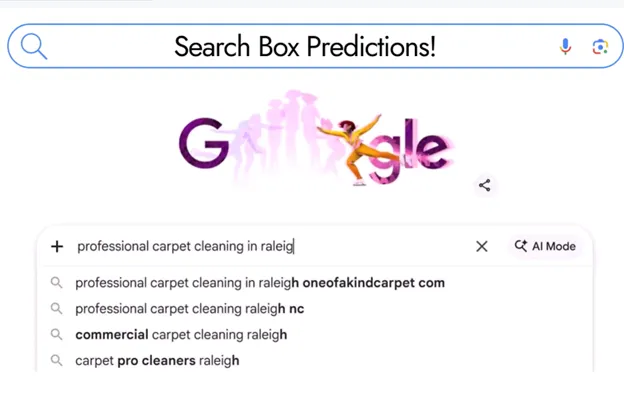
How Do You Check If Your Website Appears in Google Autocomplete Right Now?: The Self-Audit
Search your main service + location in Google
Use incognito mode for unbiased results
Check if Google shows your brand in Autocomplete or "People Also Ask"
If you don't appear, revisit your on-page SEO checklist above —
adjust titles, tighten H1s, upgrade your descriptions, and add schema.

Real-World Example:
How Did One Local Business Unlock Google Autocomplete Visibility?
A Los Angeles plumber rewrote their title tags ("Plumbing Services Los Angeles | 24hr Emergency Available") and added LocalBusiness schema.
Within two weeks, their business appeared in Google Autocomplete and was suggested in PAA.
That's the difference between being "invisible" and "chosen" at the start of a search.
"After rewriting our title tags and adding schema, our business appeared in Google's suggestions within 14 days." — Actual SBO Testimonial
How to Find Out What Questions Your Audience is Actually Asking?
Direct Tactics: Use People Also Ask, Autocomplete, and Pro Tools
Your audience’s queries are hiding in plain sight—if you look.
Use People Also Ask, Google Suggest, AnswerThePublic, AlsoAsked. com.
What This Means for You: Aligning Content Strategy with Real Search Queries
Adopt a “question harvesting” mentality.
Make collecting, tagging, and deploying these queries a part of your routine content strategy.
The Difference Between Guesswork and Data-backed Publishing?
78% more organic traffic and a spot in Google’s own autocomplete bar—
before your competitors wake up.
Does Writing Content for Humans Hurt Your Google Rankings?
Answered: Why Creating Content That Matches User Queries Actually Boosts Rankings
No—provided you also map to real query structures and intent. Google’s “helpful content” system now evaluates how efficiently your page delivers the specific answer or pathway a user wants. Creating content that matches user queries not only supports rankings, it accelerates them—especially when paired with voice, local, and featured snippet eligibility.
User Intent and Search Intent:
Why They Matter in Creating Content That Matches User Queries.
Go Do We Demystify Content That Matches User Queries: A Data-Driven Perspective
SEOs and content leaders agree: the brands winning in 2024 don’t just produce more content, they produce answer-aligned pages with user and search intent layered into every block.
By mapping each page to the underlying intent—be it “how to”, “best”, “near me”, “vs”, or “cost”—
you create content that is eligible for both blue-link results and emerging AI-driven answer engines.
How Do I Optimizae Featured Snippets? Structuring Content to Appear in AI Answers
Pages with answer-first structures, schema markup, and FAQ sections are 2. 8x more likely to be cited as AI responses (AirOps).
Invest in training your editorial team to spot high-value intent, rework old posts for schema, and test new formats.
Your future pipeline depends on it.

Frequently Asked Questions: FAQs for Content to Help SBO
What Does It Mean to Write Content for How Humans Actually Search?
Using natural language and full questions that mirror the exact words users type or speak —
not just keyword phrases.
Is There a Difference Between Writing for Humans and Writing for Search Intent?
Yes. Writing for humans focuses on clarity;
writing for search intent structures content around the specific questions buyers are actively asking.
Why Do Long-Tail Keywords Work Better for AEO?
They reflect specific intent and match how people phrase questions to voice assistants and AI tools.
How Does Content Structure Affect AI Citations?
Pages with clear question headers and schema markup earn up to 2.8× higher AI citation rates. (AirOps)
Should Every Article Have an FAQ Section?
Yes — FAQs capture additional long-tail queries and earn expandable snippet visibility on SERPs.
How do I find out what questions my audience is searching for?
Leverage Google’s People Also Ask, AlsoAsked.com, AnswerThePublic, and advanced AI tools to find real, up-to-date conversational queries.
What type of content performs best in AI-generated answers?
Direct answer blocks, clear H2/H3s as questions, and FAQ schema markup consistently win in AI and featured snippets.
Can I write naturally and still rank well in search?
Yes. Google now rewards people-first writing that still answers the user’s stated query with expertise.
How often should I update my website content for AEO?
Update at least quarterly — review titles, meta descriptions, schema, and top keywords to ensure they match what customers are searching for today. An agency might do it more often.
What is the biggest mistake people make writing content for search?
Prioritizing keywords over intent and answers—resulting in robotic, underperforming pages.
What is search intent and how does it affect content writing?
It’s the underlying goal behind a query—your content should match its format and depth to this, or risk being ignored.
Can a Business Owner Do Their Own Content Without Hiring an Agency?
Ofcourse you can. But the time it takes you to figure it all out and your team to complete it, may give the competition an advantage over you. Hiring an agency may have to be weighd against time value of losing high-value clients.
What Are the Key Steps to Make Your Small Business Visible in Google Autocomplete and Search Box Optimized?

Key Takeaways:
How to Start Creating Content That Matches User Queries Today
Open with a direct answer to search intent—every time
Use user questions as headers; structure for AI as much as readers
Refresh keyword research based on live queries, not static terms
Add FAQ sections with schema markup for every topic
Track with Google Search Console and update quarterly for result gaps
What Is the 5-Second Autocomplete Visibility Test?
Open Google. Type your service + your city — don't hit Enter.
Just watch what Autocomplete suggests. Is your brand there?
If not, you're invisible before the search even starts.
That's the gap this article is designed to close.
Explore the full SBO Curriculum and chat with our AI agent at TheSBOProtocol.com.
Sources
S. Raj, M.D. / TheSBOProtocol.com.
Director Search Box Intelligence University,
International Association for Business Leaders Education-IABLEd
Sources
Content Marketing Institute, 'B2B Content Marketing Benchmarks 2023'
HubSpot 'The Ultimate List of Marketing Statistics for 2024'

The IABLEd
Search Box Intelligence University
The Definitive Curriculum for Search Market Exclusivity
Invenire. Imperare. Excludere.
Be Found. Command. Exclude.
Command the Box. Control the Market.
Want Your World to Discover You,
the Easy Way?
Expertise without visibility is a missed opportunity.
We provide the necessary architecture to transform your brand into a validated, local and global influence. Ask us how.
Copyright 2026. THE SBO PROTOCOL. All Rights Reserved.

* * * * *
COMPANY
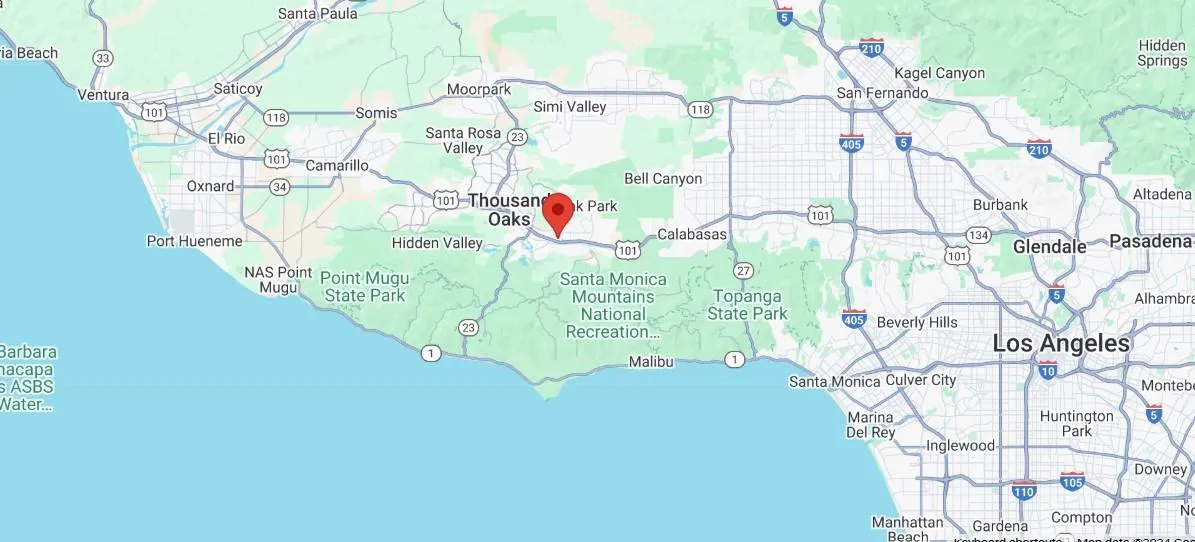
30721 Russell Ranch Rd Suite 140, Westlake Village, CA 91362
CUSTOMER CARE
Get In Touch
Mon – Thurs
10:00am – 4:00pm
Fridays by Appointment
Saturday, Golf
Sunday –hurch
LEGAL
Stay informed about how new technology can make or break a brand.
FOLLOW US


Invenire. Imperare. Excludere.
Be Found. Command. Exclude.
© 2026 IABLEd Search Box Intelligence Academy | All Rights Reserved.
1. SBO Foundations 2: Practical SBO Implementation 3: Deeper Strategy & Behavior
4: Advanced Tactics & Data 5: Expert / Future-Facing 6 Bonus Academy Series